
Many small business owners start their journey by relying on a patchwork of off-the-shelf applications. You might use one tool for accounting, another for customer relationship management (CRM), a third for inventory tracking, and perhaps a spreadsheet to manage your project timelines. While these tools work well in the beginning, they often create a “Frankenstein’s Monster” of disconnected systems. As your business grows, these fragmented processes lead to data silos, manual entry errors, and a significant amount of wasted time. This is where the benefits of custom software for small businesses become clear. Unlike generic software designed to serve everyone, custom software is built specifically for your unique workflows, your specific customer needs, and your long-term growth objectives.
Investing in custom software is not just about having a “cool” new app; it is a strategic move to improve your return on investment (ROI). By tailoring technology to your business rather than forcing your business to adapt to the limitations of a third-party platform, you unlock significant operational efficiencies. From automating repetitive tasks to providing deep, actionable insights into your company’s performance, custom software serves as a force multiplier for small teams. In this guide, we will explore seven key ways that custom software drives ROI and provides a competitive edge for growing small businesses.
Eliminating Inefficient Manual Processes through Automation
One of the most immediate benefits of custom software for small businesses is the elimination of manual, repetitive tasks. In many small companies, employees spend a disproportionate amount of time on “busy work”—data entry, manual invoicing, following up on leads, or updating inventory levels. These tasks are essential but do not add value to the core mission of the company. Custom software allows you to automate these workflows entirely, freeing up your team to focus on high-level strategy and customer service.
For example, consider a service-based business that manually sends out invoices and tracks payments. A custom solution can automatically generate invoices based on completed milestones, send payment reminders, and update the accounting ledger in real-time. This reduces the risk of human error, ensures faster payment cycles, and allows the administrative team to focus on acquiring new clients rather than chasing old ones.
Key Areas for Automation
To maximize ROI through automation, small businesses should look at these specific areas:
- Lead Management: Automatically capturing leads from your website, tagging them based on interest, and assigning them to the correct sales representative.
- Order Fulfillment: Syncing sales data directly with inventory levels and triggering shipping notifications to customers.
- Scheduling and Booking: Allowing customers to book appointments online that automatically sync with staff calendars and send out confirmation emails.
- Reporting: Generating weekly or monthly performance reports automatically instead of spending hours compiling data from multiple sources.
Seamless Integration with Existing Workflows
A major pain point for small businesses using off-the-shelf software is the “integration gap.” When you use multiple different platforms, you often have to manually move data from one to another. This not only wastes time but also increases the likelihood of data discrepancies. If a customer changes their phone number in your CRM but that change isn’t reflected in your shipping software, you face potential delivery failures and frustrated clients.
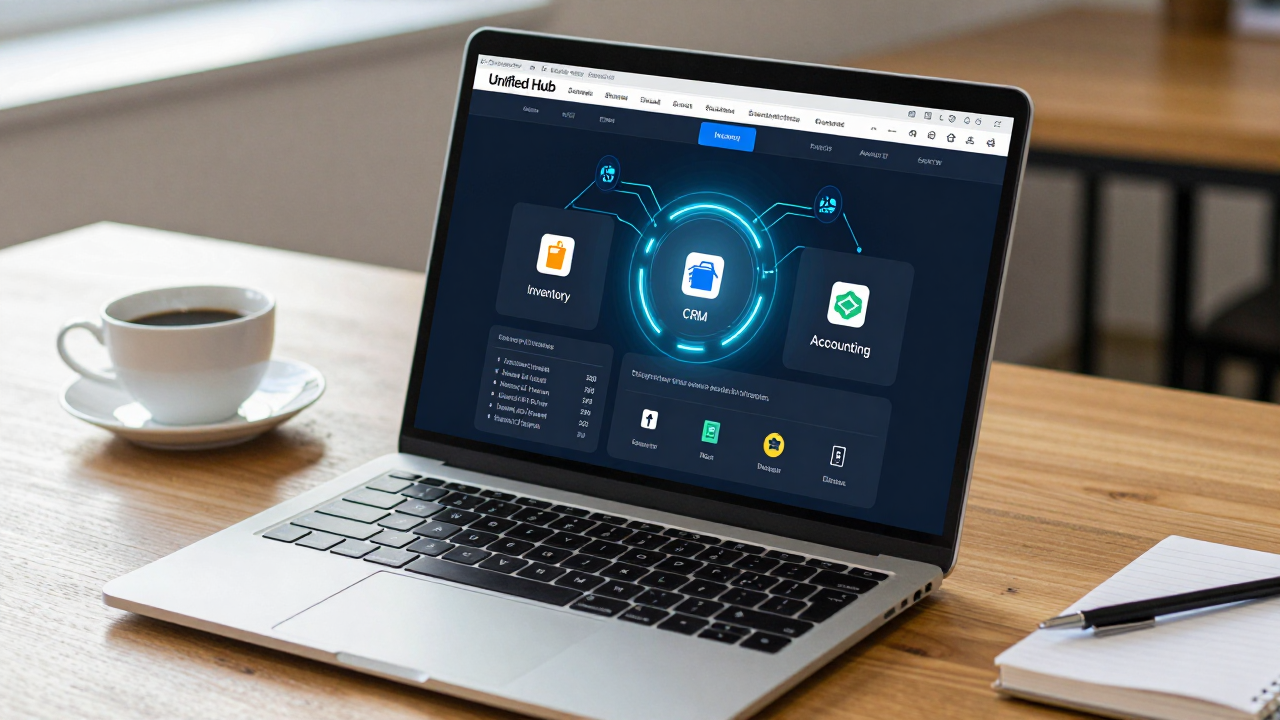
Custom software solves this by acting as a unified hub. Because it is built specifically for your company, it can be designed to communicate seamlessly with every tool you use. Whether it is through native integrations or custom APIs, your data flows freely across the organization. This creates a “single source of truth,” where every department—from sales to warehouse to accounting—is looking at the exact same information in real-time.
The Value of a Unified Data Ecosystem
When your systems are integrated, the ROI manifests in several ways:
- Reduced Data Entry: Employees only enter information once, which significantly speeds up operations.
- Improved Accuracy: Real-time synchronization ensures that your team is never working with outdated information.
- Faster Response Times: When customer data is accessible across all departments, support teams can resolve issues much faster.
- Better Collaboration: Teams can see each other’s progress without needing to send constant status updates via email or Slack.
Scalability Without the Growing Headcount
For a small business, hiring is often one of the biggest expenses. Many companies reach a point where they cannot handle more volume because they lack the manpower to process it. They hit a “growth ceiling” where every new customer requires a new hire just to manage the administrative overhead. Custom software breaks this ceiling by allowing your business to scale its output without necessarily scaling its headcount.
By building software that handles the heavy lifting of your core processes, you can manage a much higher volume of transactions, orders, or inquiries with the same team size. This is the essence of operational leverage. If your software can handle 1,000 orders as easily as it handles 100, your profit margins expand significantly because your fixed costs (like payroll) remain relatively stable while your revenue grows.
Scaling Your Infrastructure
Custom software provides a foundation for growth in several ways:
- Automated Workflows: As volume increases, the software handles the repetition, keeping the team’s workload manageable.
- Modular Design: You can build your software in modules, adding new features as your business expands into new markets or product lines.
- High-Volume Processing: Custom builds can be optimized to handle large datasets or high-traffic periods (like Black Friday) more effectively than generic SaaS platforms.
- Consistent Experience: As you grow, custom software ensures that every customer receives the same high-quality experience, regardless of how large the company becomes.
Data-Driven Decision Making with Custom Analytics
Generic software provides generic reports. If you use a standard CRM, you might get a dashboard showing how many leads were contacted. However, a small business often needs much more nuanced data to stay competitive. You might need to know the exact lifetime value of a specific customer segment, the churn rate of a particular product line, or the most profitable time of day for your specific location.
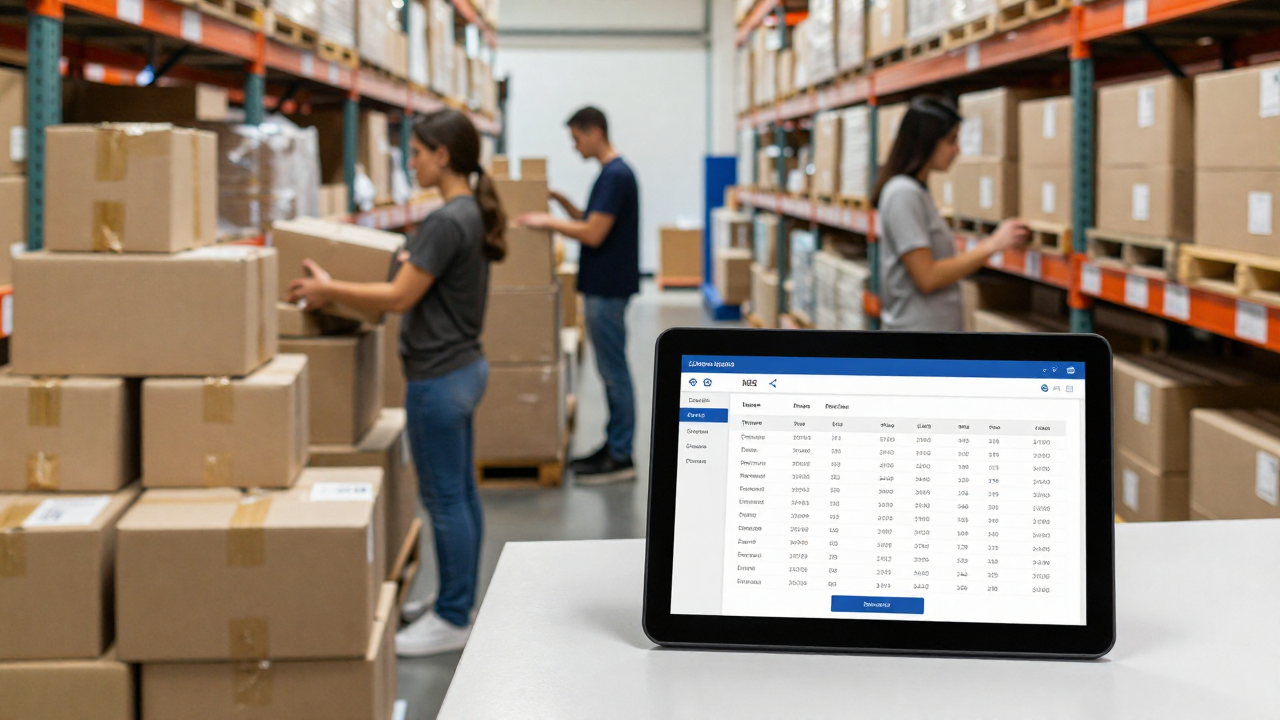
Custom software allows you to define your own Key Performance Indicators (KPIs). You can build custom dashboards that pull data from every corner of your business to give you a 360-degree view of your health. This level of insight allows for proactive decision-making. Instead of guessing which marketing channel is working best, you can see the exact ROI of every dollar spent because the software is tracking the journey from the first click to the final invoice.
Transforming Data into Actionable Insights
With a custom-built analytics engine, you can:
- Identify Trends: Spot seasonal shifts in demand before they happen and adjust your inventory accordingly.
- Optimize Pricing: Analyze which products have the highest margins and adjust your marketing focus to highlight them.
- Predict Customer Behavior: Use historical data to identify which customers are likely to churn and reach out to them proactively.
- Measure Employee Productivity: Track how long specific tasks take to identify bottlenecks in your internal processes.
Enhanced Security and Data Privacy
In an era of increasing cyber threats, security is a non-negotiable benefit of custom software for small businesses. Many small businesses feel they are “too small to be targeted,” but in reality, small businesses are often easier targets because they lack the robust security infrastructure of large corporations. Furthermore, using multi-tenant SaaS platforms means your data is stored on a server shared with thousands of other companies. While these platforms have security measures in place, they also represent a broader surface area for potential attacks.
Custom software provides a “walled garden” approach. Because the software is built specifically for you, you have total control over where your data is stored, how it is encrypted, and who has access to it. You can implement specific security protocols that match your industry’s requirements, such as HIPAA for healthcare or PCI-DSS for payments. This level of control significantly reduces your risk profile and builds trust with your customers, who are increasingly concerned about how their personal information is handled.
Security Advantages of Custom Builds
- Isolated Environment: Your data isn’t sitting on a public cloud shared with your competitors.
- Granular Permissions: You can control exactly which employees can see which pieces of data, down to the individual field level.
- Audit Trails: Custom software can be built to log every single action taken within the system, providing a clear history for compliance and internal security.
- Faster Patching: When a vulnerability is identified, you can work with your developer to address it immediately rather than waiting for a third-party provider to update their entire platform.
Improved Customer Experience and Retention
At the end of the day, your business exists to serve your customers. If your internal processes are clunky, slow, or prone to error, your customers will feel it. They will experience long wait times, incorrect orders, and inconsistent communication. Custom software allows you to create a seamless, personalized experience that builds long-term loyalty.

By having a custom platform, you can create unique customer portals, personalized communication flows, and specialized self-service tools that your competitors simply don’t have. When a customer feels like you understand their specific needs and can provide a smooth, friction-free experience, they are far more likely to stay with your business. This improves your customer retention rate, which is often much cheaper than the cost of acquiring new customers.
Enhancing the Customer Journey
Custom software can improve the customer experience by:
- Personalized Portals: Give customers a dedicated space to track their orders, view their history, and manage their profiles.
- Faster Support: Integrate your help desk with your internal database so support agents can see a customer’s entire history instantly.
- Proactive Communication: Automatically send updates based on specific triggers (e.g., “Your order has cleared the quality check”).
- Specialized Features: Build unique functionalities that your specific niche requires, such as a custom booking engine for a unique type of spa or a specialized inventory tracker for a boutique hobby shop.
Long-Term Cost Savings vs. Subscription Fatigue
One of the most overlooked benefits of custom software for small businesses is the long-term financial impact. Many small businesses fall into the trap of “subscription fatigue.” They pay monthly fees for five different apps, each with its own per-user pricing model. As the team grows, these costs can spiral out of control, eating into the profit margins of the business.
While custom software requires an upfront investment in development, it often results in significantly lower total cost of ownership (TCO) over time. You aren’t paying a “convenience tax” to a large corporation every month. Instead, you own the asset. You can choose to host it on your own servers or a private cloud, and you aren’t forced to pay for features you never use. Over a three-to-five-year period, the cost of a custom solution often becomes much lower than the cumulative cost of multiple high-priced SaaS subscriptions.
Calculating the ROI of Custom Software
To determine if custom software is right for your business, consider these cost factors:
- Eliminate Per-User Fees: Your costs stay flat even as you hire more employees.
- Remove Feature Bloat: You only pay for the functionality you actually need.
- Reduce Training Costs: Because the software is tailored to your specific workflows, employees can learn it faster than a complex, generic tool.
- Ownership of Intellectual Property: The software becomes a company asset that can be sold, licensed, or used as a competitive moat.
Conclusion
The benefits of custom software for small businesses extend far beyond simple convenience; they represent a fundamental shift in how a company can operate, scale, and compete. By moving away from the limitations of off-the-shelf tools, small businesses can automate their most tedious tasks, unify their data into a single source of truth, and create a scalable infrastructure that supports rapid growth. Furthermore, the advantages of enhanced security, deeper data analytics, and a superior customer experience provide a significant competitive edge in a crowded marketplace.
While the initial decision to invest in custom software requires careful planning and a clear understanding of your business goals, the long-term ROI is substantial. By building a digital foundation that is uniquely yours, you empower your team to work smarter, your customers to experience more, and your business to achieve its full potential. In the modern economy, the right software shouldn’t just be a tool you use—it should be the engine that drives your success.